
PN25

Swagelok KPR1GRA412A20000 single-stage stainless steel pressure reducing regulator. Features 316 SS body, X750 diaphragm, 0-250 psig control range, and 3600 psig max inlet. 0.06 Cv.
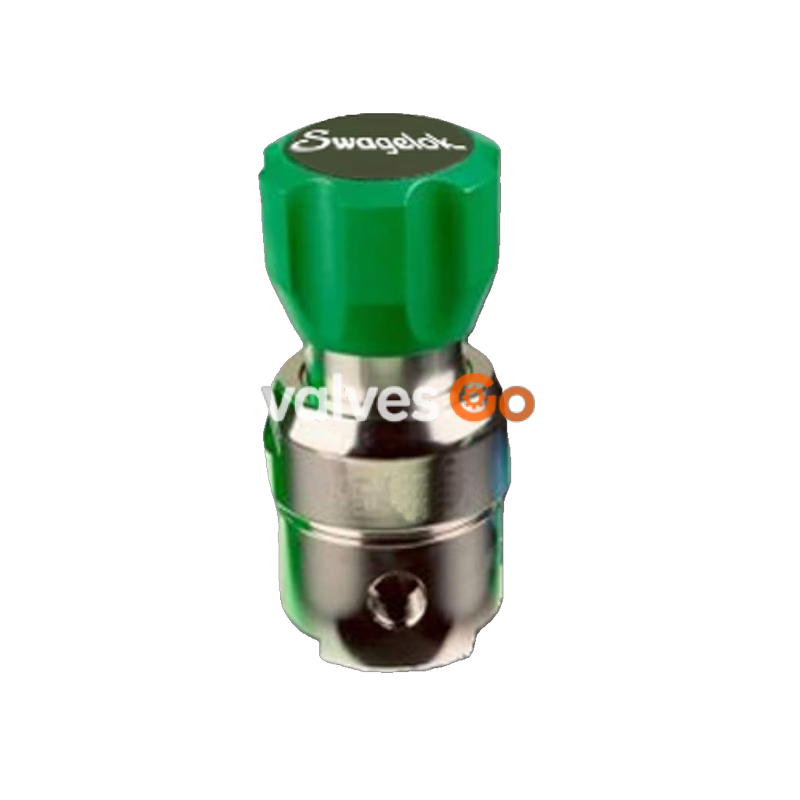
Swagelok KPR1GRA412A20000 is a single-stage stainless steel pressure reducing (PR) regulator designed for precise and reliable gas or liquid pressure control. Part of the KPR series, this compact regulator provides excellent accuracy, sensitivity, and setpoint pressure stability. It features a 316 stainless steel body and an X750 diaphragm sensing mechanism, making it suitable for applications requiring durable performance under high inlet pressures up to 3600 psig (248 bar). The regulator is configured with a 0.06 Cv flow coefficient and 1/4 in. Female NPT ports to ensure consistent downstream delivery with minimal droop.
| Specification | Detail |
|---|---|
| Body Material | 316 Stainless Steel |
| Pressure Control Range | 0 to 250 psig (17.2 bar) |
| Maximum Inlet Pressure | 3600 psig (248 bar) |
| Flow Coefficient | 0.06 Cv |
| Ports | 1/4 in. Female NPT |
| Port Configuration | A |
| Sensing Mechanism | X750 Diaphragm |
| Handle Type | Green Knob Handle |
| Maximum Temperature | 176 °F (80 °C) |
| Cleaning Process | Standard Cleaning and Packaging (SC-10) |
The KPR series single-stage design is engineered to achieve reliable pressure reduction while maintaining constant downstream pressure. By minimizing droop, the regulator ensures system stability even as flow rates fluctuate. The use of high-performance materials like the X750 diaphragm provides long-term reliability in demanding environments.
Identifiers
Safety Note
System designers and users must review the complete catalog and consider the total system design to ensure safe, trouble-free performance. Function, material compatibility, and proper installation are the responsibilities of the system designer.
Explore similar products in our catalog