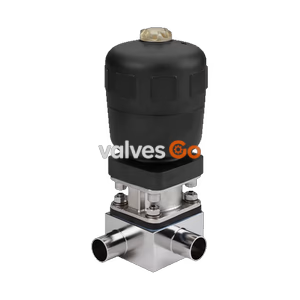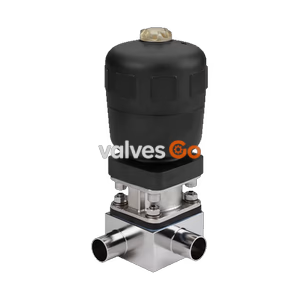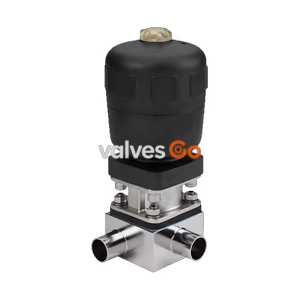
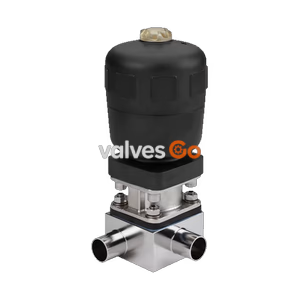
Type 2032

Burkert Type 2031 (SKU 348494) 2/2-way piston-operated diaphragm valve. Features stainless steel body, 1/2" clamp connection, PTFE/EPDM diaphragm, and PPS actuator.
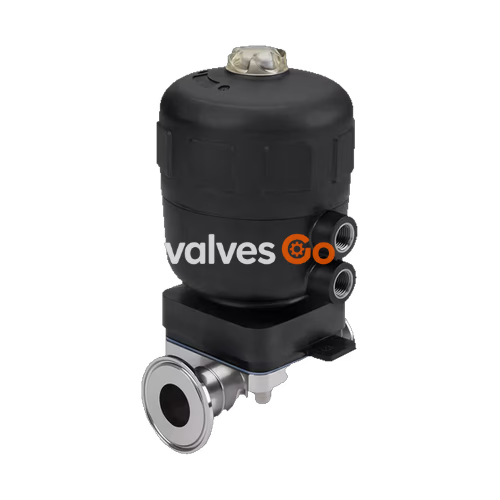
BURKERT 348494 (Type 2031) is an externally controlled 2/2-way diaphragm valve consisting of a pneumatically operated piston actuator, a diaphragm, and a stainless steel valve body. The proven and robust PPS actuator combined with the flow-optimised valve body ensures reliable operation in hygienic or aggressive environments. The minimal dead space design enables high volume flow rates and a wide range of possible applications.
This specific model features a 1/2" clamp connection (DN15), a PTFE diaphragm with an EPDM backing membrane, and operates with Control Function I (double-acting). It is designed to handle pressures up to 10 bar and medium temperatures ranging from -10 °C to 130 °C, making it fully CIP and SIP capable.
The type label provides essential information for identifying the valve's specifications and operating limits.

Description of the type label (example)
| Component | Material | Permissible Temperature [°C] |
|---|---|---|
| Actuator | PPS | +5...+140 |
| Valve Body | Stainless steel | -10...+140 (short-term up to 150) |
| Diaphragm | PTFE/EPDM | -10...+130 (Steam sterilisation max. +140 °C for 60 min) |
WARNING
The component (actuator, diaphragm, or housing) with the lowest maximum permissible temperature defines the maximum permissible temperature for the medium and environment.
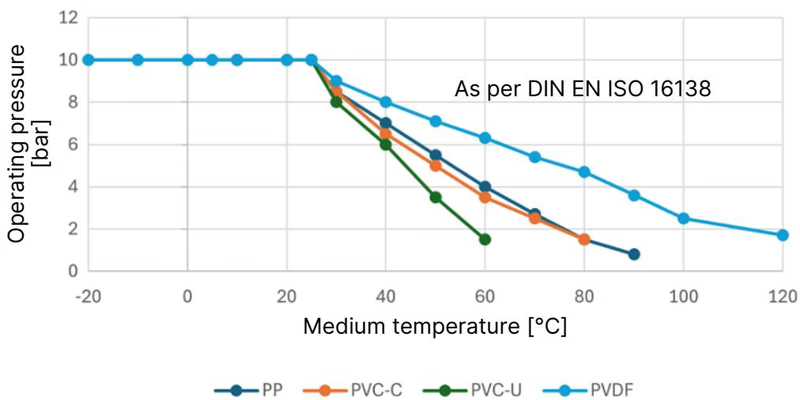
Pressure-temperature diagram
INFO
The information in the pressure-temperature diagram is important for material selection. Observe the permissible operating pressure, depending on the medium temperature!
The installer and the operator are responsible for ensuring self-draining. The following points must be observed for optimum self-draining:
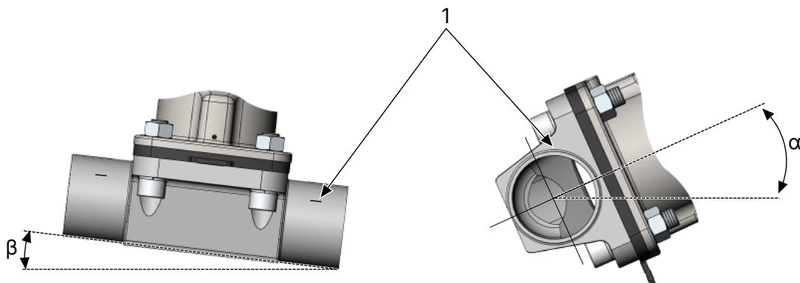
Installation position for self-draining (β: Inclination angle of the pipeline, α: Self-draining angle)
Risk of crushing
If the compressor is not positioned correctly and the actuator is actuated, this may result in injuries and damage to the device. Before actuating the actuator, ensure that the compressor is in the correct position.
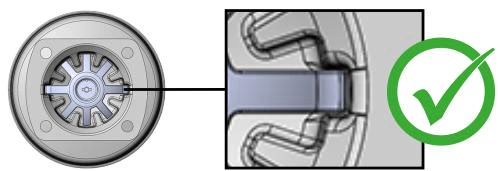
Correct and incorrect position of the compressor
TIP
Shortened inspection intervals are required for muddy and abrasive media. A bulging PTFE diaphragm may reduce the flow rate.
Risk of injury from sudden discharge of pressure
Disassembling a pressurised device can cause medium to escape unexpectedly or a sudden discharge of pressure. Before disassembly, shut off the pressure and vent all lines. Completely drain the lines.
Tightening Torques for Body Connection (Diaphragm Size 15):
When installing the actuator on the valve body, slightly tighten the body screws crosswise without applying pressure until the diaphragm rests between the valve body and actuator. Actuate the valve twice to position the diaphragm correctly. With pressure applied to the upper pilot air port (for CF I), tighten the body screws in three stages (approx. 1/3, then 2/3, and then full tightening torque), in each case crosswise.

Explore similar products in our catalog