
PN25

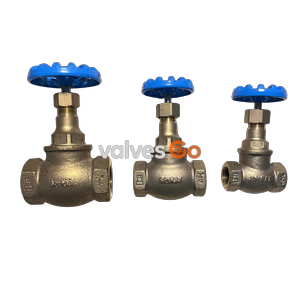
Yoshitake GLV-1 globe valve with bronze body and 1.0 MPa maximum pressure. Suitable for steam, air, water, and oil applications up to 185℃.
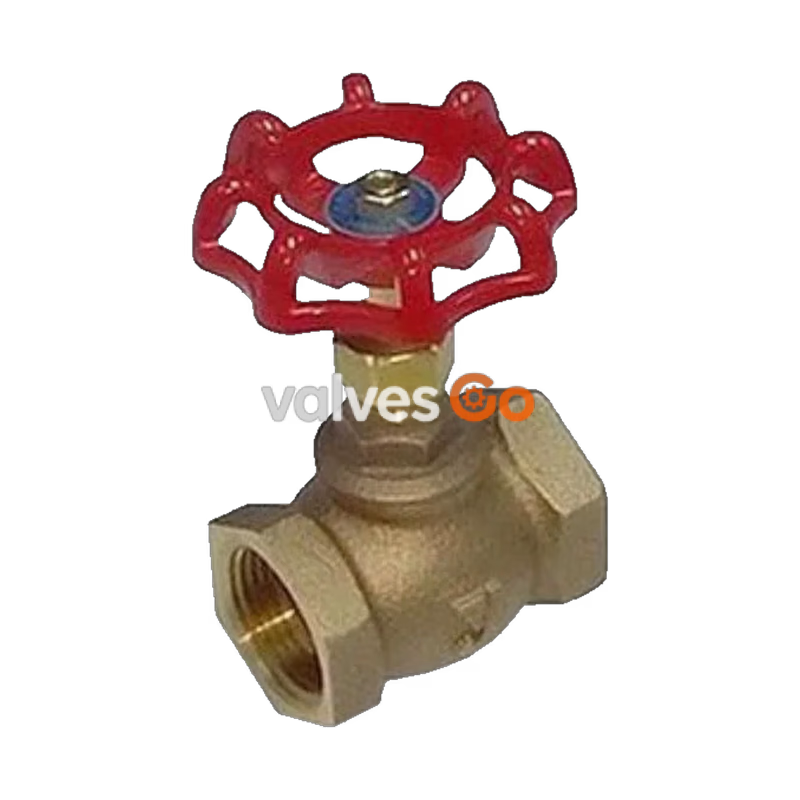
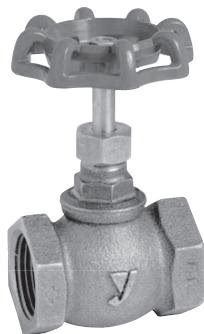
Yoshitake GLV-1 globe valve features wetted parts made of bronze or dezincification resistant brass. It is widely applicable for steam, air, cold and hot water, oil, and other non-dangerous fluids. The valve operates at a maximum pressure of 1.0 MPa and handles maximum temperatures up to 185℃.
| Application | Steam, Air, Cold and hot water, Oil, Other non-dangerous fluids |
|---|---|
| Maximum pressure | 1.0 MPa |
| Maximum temperature | 185℃ |
| Body Material | Bronze |
| Bonnet Material | Brass or bronze |
| Disc Material | Brass or bronze |
| Connection | JIS Rc screwed |
INFO
Valve is closed at the time of shipment from factory.
| Nominal size | d | L | H | D | Weight |
|---|---|---|---|---|---|
| 15A | Rc 1/2 | 50 | 76 | 54 | 0.3 |
| 20A | Rc 3/4 | 57 | 86 | 61 | 0.4 |
| 25A | Rc 1 | 65 | 100 | 68 | 0.6 |
| 32A | Rc 1-1/4 | 75 | 123 | 77 | 0.9 |
| 40A | Rc 1-1/2 | 85 | 135 | 77 | 1.1 |
| 50A | Rc 2 | 100 | 159 | 83 | 1.7 |
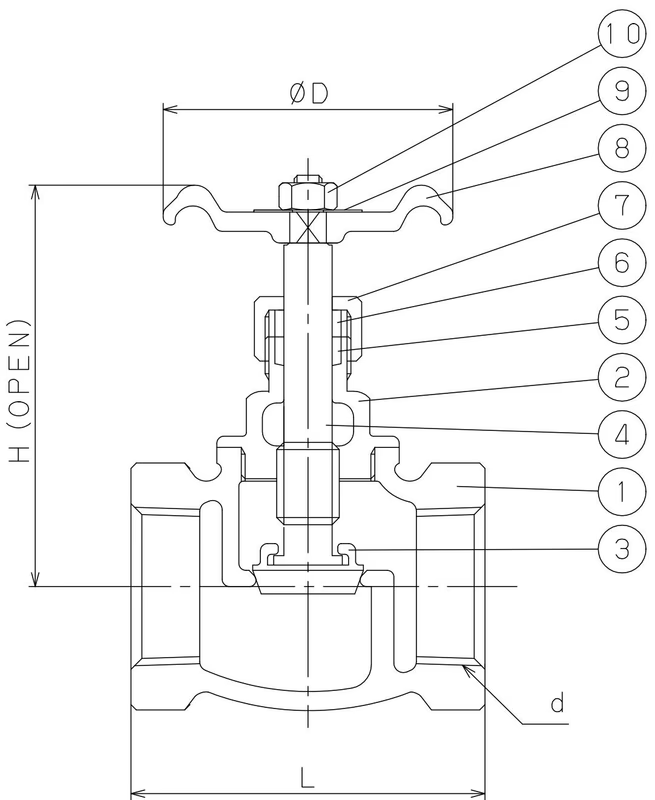
| No. | Part Name | Material | Qty |
|---|---|---|---|
| 1 | Body | Bronze | 1 |
| 2 | Bonnet | DZR or Bronze | 1 |
| 3 | Disc | DZR or Bronze | 1 |
| 4 | Stem | DZR | 1 |
| 5 | Gland Packing | PTFE | 1 |
| 6 | Packing Ring | Brass | 1 |
| 7 | Gland Nut | Brass | 1 |
| 8 | Handlewheel | Aluminium | 1 |
| 9 | Name Plate | Aluminium | 1 |
| 10 | Nut | Steel | 1 |
| Size | d | L | H | D | Weight(kg) |
|---|---|---|---|---|---|
| 15A | NPT 1/2 | 50 | 76 | 54 | 0.3 |
| 20A | NPT 3/4 | 57 | 86 | 61 | 0.4 |
| 25A | NPT 1 | 65 | 100 | 68 | 0.6 |
| 32A | NPT 1-1/4 | 75 | 123 | 77 | 0.9 |
| 40A | NPT 1-1/2 | 85 | 135 | 77 | 1.1 |
| 50A | NPT 2 | 100 | 159 | 83 | 1.7 |
WARNING
DANGER
Before applying fluid, make sure that there is no danger if the fluid flow into the end of the piping. Failure to follow this notice may result in property damage due to fluid leakage.
TIP
| Trouble | Cause | Remedy |
|---|---|---|
| Outside leakage | 1. The gland nut is loosened. 2. The gland packing is damaged. 3. The spindle is damaged. | 1. Tighten the gland nut additionally. 2. Replace the product with new one. 3. Replace the product with new one. |
| Leakage from the valve and/or valve seat on complete closing | 1. The valve and/or valve seat is damaged. 2. Foreign substance is stuck. | 1. Replace the product with new one. 2. Remove the foreign substance. |
| Operation torque of the handle is abnormally large | 1. Too much tightening of the gland nut. 2. Foreign substance is stuck on spindle and screw part. | 1. Loosen the gland nut and tighten it again to the no leakage degree. 2. Remove the foreign substance. |
| Abnormal sound | 1. Each screw part is loosened. | 1. Retighten the loosened parts. |
WARNING
Completely discharge the pressure inside of the product, line and equipment before inspection and maintenance. For high temperature fluid, cool down the product till it can be touched with bare hands. Failure to follow this notice may result in injury or burns due to residual pressure.
Periodic inspection
Please conduct periodic inspection about once a year in order to maintain optimal performance and function of the product.
Yoshitake Isolation Valves / Globe Valves
GLV, BSV, FV, and HV series globe valves for threaded and flanged isolation duties.
Explore similar products in our catalog