
PN16

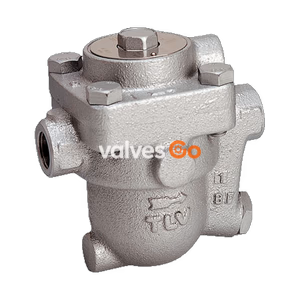
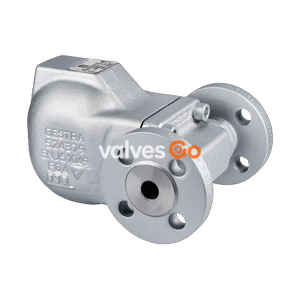
TLV SJH7NX / SJH7VX inline repairable free float steam traps with thermostatic X-element air vent. Features continuous discharge for capacities up to 32 barg.
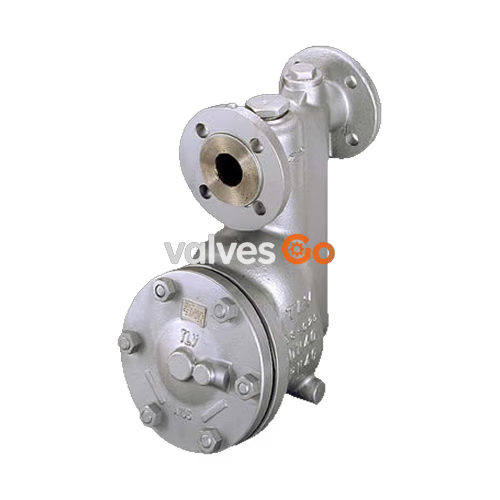
TLV SJH7NX / SJH7VX inline repairable free float steam traps with thermostatic air vent (X-element) are suitable for a wide range of applications with small-to-large capacities and pressures up to 32 barg. They are commonly used in heat exchangers, tank heaters, dryers, and process equipment. The traps discharge condensate continuously and automatically, at a temperature slightly lower than saturation temperature.
Hazard Warning
NEVER apply direct heat to the float. The float may explode due to increased internal pressure, causing accidents leading to serious injury or damage to property and equipment.
Operating Limits
Install properly and DO NOT use this product outside the recommended operating pressure, temperature and other specification ranges. DO NOT use this product in excess of the maximum operating pressure differential. Such use could make discharge impossible (blocked).
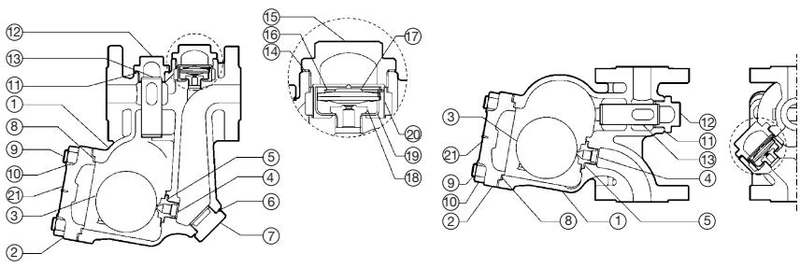
The SJHX series features versatile configurations for both horizontal and vertical installations.
Maintenance Setup
Install a bypass valve to discharge condensate, and inlet and outlet valves to isolate the trap in the event of trap failure or when performing maintenance.
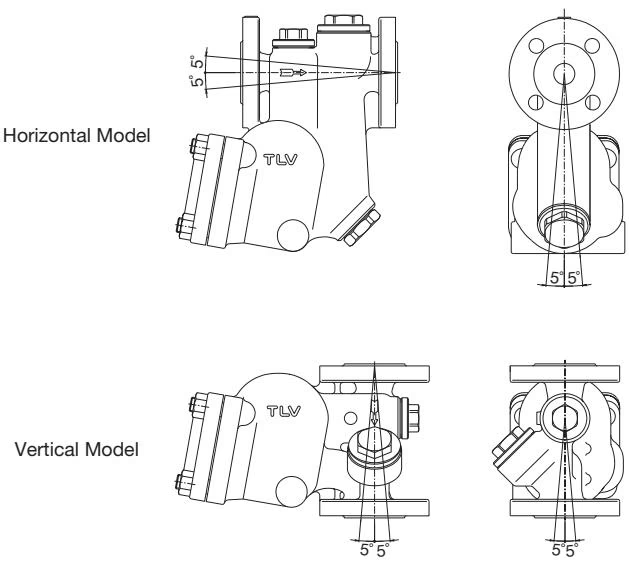
Maximum Allowable Inclination
| Requirement | Correct Installation | Incorrect Installation |
|---|---|---|
| Install a catchpot of the proper diameter. | Ensure appropriate diameter. | Diameter is too small. |
| Make sure the flow of condensate is not obstructed. | Flush piping alignment. | Diameter is too small and inlet protrudes into pipe. |
| To prevent rust and scale from flowing into the trap. | Connect inlet pipe 25 - 50 mm above the base of the T-pipe. | Rust and scale flow into the trap with the condensate. |
| When installing on the blind end. | Make sure nothing obstructs flow. | Condensate collects in the pipe. |
A visual inspection can be carried out to aid in determining the necessity for immediate maintenance or repair if the trap is open to atmosphere.
| Status | Description |
|---|---|
| Normal | Condensate is discharged continuously with flash steam and the sound of flow can be heard. If there is very little condensate, there is almost no sound of flow. |
| Blocked | No condensate is discharged. The trap is quiet and makes no noise, and the surface temperature of the trap is low. |
| Blowing | Live steam continually flows from the outlet and there is a continuous metallic sound. |
| Steam Leakage | Live steam is discharged through the trap outlet together with the condensate and there is a high-pitched sound. |
Operational inspections should be performed at least twice per year, or as called for by trap operating conditions.
| Parts | Inspection Procedure |
|---|---|
| Body, Cover(s) | Check inside for damage, dirt, grease, oil film, rust or scale |
| Gaskets | Check for warping or damage |
| X-element (SJHX) | Check for damage |
| Screen(s) | Check for clogging, corrosion or damage |
| Float | Check for deformation, damage, oil film or water inside |
| Air Vent Valve Seat, Orifice | Check for rust, scale, oil film, wear or damage |
| Problem | Cause | Remedy |
|---|---|---|
| No condensate is discharged (blocked) or discharge is poor | Float is damaged or filled with condensate | Replace the float |
| Orifice, screen or piping is clogged with rust or scale | Clean | |
| X-element is damaged | Replace the X-element | |
| The trap operating pressure exceeds the maximum specified pressure, or there is insufficient pressure differential | Compare specifications and actual operating conditions | |
| Steam-locking has occurred | Blow down through the bypass or close the trap inlet valve and allow the trap to cool | |
| Steam is discharged or leaks from the trap outlet (blowing / steam leakage) | Orifice is clogged, or rust and scale have accumulated under the float | Clean |
| Orifice is damaged | Replace the orifice | |
| Float is deformed or coated with scale | Clean or replace the float | |
| Trap is installed above the maximum allowable inclination angle | Correct the installation |