
Skip to content
CIP/SIP CapableATEX/IECExFDA / USP Class VIIP65/67

BURKERT 20131364 Type 2105 Diaphragm Tank Bottom Valve, Flange, NC

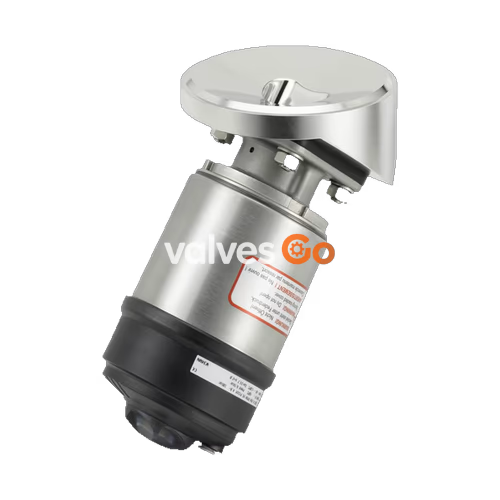
Burkert Type 2105 (SKU 20131364) diaphragm tank bottom valve with pneumatic actuator. Features stainless steel body, EPDM diaphragm, 0-10 bar pressure, and CIP/SIP capability.
BURKERT 20131364 Type 2105 Diaphragm Tank Bottom Valve, Flange, NC

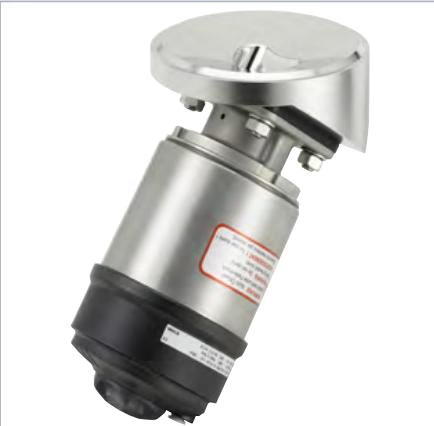
Burkert Type 2105 (SKU 20131364) is an externally controlled diaphragm tank bottom valve consisting of a pneumatically operated piston actuator, a diaphragm, and a tank bottom valve body. The proven and robust actuator with a stainless steel housing ensures reliable use in hygienic or aggressive ambient conditions. The flow-efficient valve bodies feature minimal dead space, enabling high flow rates and a wide range of possible uses. The valve body and diaphragm are available in various materials to meet specific process requirements. The actuator has a compact, autoclavable design with gap-free seals, and the integration of automation units (Type ELEMENT) is possible across all configuration levels.

It is a highly integrated system consisting of a valve and an automation unit with integrated pilot air ducts, preventing the intake of ambient air. The valve offers IP65/67 and NEMA Type 4X protection degrees and displays high chemical resistance. Explosion-proof ATEX/IECEx device variants are also available for potentially explosive atmospheres.
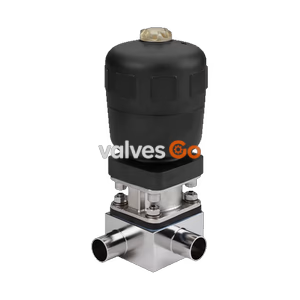
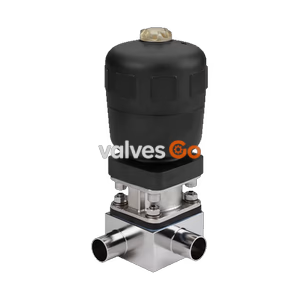
BURKERT 20131364 Burkert Type 2105 diaphragm tank bottom valve product view

Product Overview ​

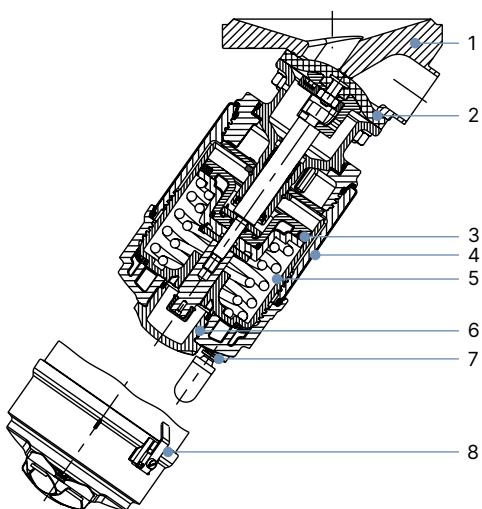
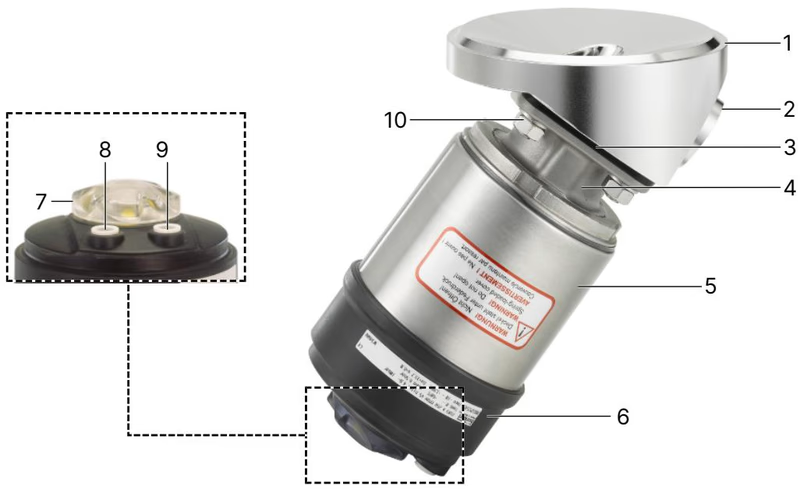
BURKERT 20131364 Burkert Type 2105 product overview diagram with components

  1. Tank bottom valve body with welding flange
  2. Port connection
  3. Diaphragm
  4. Diaphragm bonnet
  5. Actuator housing
  6. Actuator cover
  7. Transparent cap with position indicator
  8. Pilot air port 2 for CF I, exhaust port for CF A and CF B
  9. Pilot air port 1 for CF A, CF B and CF I
  10. Body screws

General Technical Data ​

FeatureSpecification
Block body MaterialStainless steel block material 1.4435 (DIN EN 10088) and 316L (ASTM A479 / ASME BPE)
Diaphragm MaterialEPDM (AD), PTFE/EPDM (EA), Advanced PTFE/EPDM (EU), Laminate of GYLON® and EPDM (ER)
Actuator MaterialDN 08...65: PPS; DN 65...100: Stainless steel 1.4308
Actuator CasingDN 08...65: Stainless steel 1.4561 (316Ti); DN 65...100: Stainless steel 1.4308
Standard Surface QualityInternally electrically polished: Ra ≤ 0.38 μm (ASME BPE SF4 / DIN HE4). Internally mechanically polished: Ra ≤ 0.5 μm (ASME BPE SF1). Externally Ra ≤ 1.6 μm
Maximum Pilot Pressure10 bar (7 bar for actuator size 130, 225)
Pilot Air PortPush-in connector for outer diameter ∅ 6 mm or 1/4" (standard), thread G 1/8"
Operating MediumNeutral gases and liquids, highly purified, sterile, aggressive or abrasive mediums
Ambient Temperature-10 °C to +60 °C (autoclavable)

Medium Temperature Limits ​

  • EPDM (AD): -10 °C to +143 °C (steam sterilisation max. +150 °C for 60 min)
  • PTFE/EPDM (EA): -10 °C to +130 °C (steam sterilisation max. +140 °C for 60 min)
  • Advanced PTFE/EPDM (EU): -5 °C to +143 °C (steam sterilisation max. +150 °C for 60 min)
  • Laminate of GYLON® and EPDM (ER): -5 °C to +130 °C (steam sterilisation max. +140 °C for 60 min)

Control Functions ​

  • Control function A (CF A): Pneumatically operated tank bottom valve. Normally closed by spring force.
  • Control function B (CF B): Pneumatically operated tank bottom valve. Normally opened by spring force.
  • Control function I (CF I): Pneumatically operated tank bottom valve on either side. Switching position dependent on external control.

Approvals and Conformities ​

  • Explosion Protection: ATEX (EPS 18 ATEX 2 008 X II 2G Ex h IIC T4…T2 Gb / II 2D Ex h IIIC T135 °C…T300 °C Db) and IECEx (IECEx EPS 18.0007X).
  • Foods and Beverages/Hygiene: 3-A Sanitary Standards Inc., FDA (Code of Federal Regulations), USP Class VI, EC Regulation 1935/2004.
  • Others: TA Luft (Technical instruction on air quality control).

Materials ​

BURKERT 20131364 Burkert Type 2105 material specifications and cross-section

  1. Valve body: Stainless steel
  2. Diaphragm: EPDM, PTFE/EPDM, advanced PTFE/EPDM, laminate of GYLON® and EPDM
  3. Piston seal: FKM
  4. Cover: Stainless steel 1.4561 (316Ti)
  5. Actuator: Polyphenylene sulphide (PPS)
  6. Transparent cap: Polysulfone (PSU)
  7. Pilot air ports: Push-in connector PP (standard), Thread G 1/8" stainless steel 1.4305
  8. Ground terminal: Stainless steel 1.4301/1.4305 (only for ATEX/IECEx variant)

Determination of Actuator Size ​

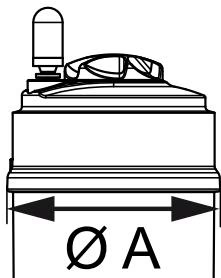
BURKERT 20131364 Burkert Type 2105 determination of actuator size based on outer diameter

∅ A [mm]Corresponds to actuator size
64.550 (D)
9170 (M)
12090 (N)
159130 (P)
245225 (L)

Installation and Welding ​

Welding the tank bottom valve body

The diaphragm and actuator can be damaged when welding the valve body into the container base or the pipeline. In the case of devices with a welded connection, remove the actuator and diaphragm from the valve body before installation.

Welding Sequence

  1. Weld the tank bottom valve body to the container base before the container is assembled. Weld the tank bottom valve body in the middle of the container base so that the container can be optimally drained.
  2. Weld the tank bottom valve body into the pipeline.
  3. After welding the surface of the valve body, smooth by sanding if necessary and clean carefully.
  4. Install the actuator on the valve body.

Explosion Protection (ATEX/IECEx) ​

For devices with the PX51 code (EPS 18 ATEX 2008 X / IECEx EPS 18.0007 X mech. Ex h IIC T4…T2 Gb / Ex h IIIC T135 °C…T300 °C Db), the valve actuator is suitable for use as Category 2 equipment in Zones 1/21 and 2/22.

Risk of explosion due to electrostatic charge

If electrostatically charged equipment or personnel suddenly discharge, there is a risk of explosion in potentially explosive atmospheres.

  • Take appropriate measures to ensure that electrostatic charges cannot accumulate.
  • Only wipe the device surface gently with a damp or anti-static cloth.
  • Ground the actuator and valve body. If a plastic valve body is used, ground the actuator separately.

Depending on the conductivity of the medium, electrostatic charges may accumulate on the valve diaphragm. To prevent static electricity generation in the fluid (according to IEC 60079-32-1):

  1. Media with conductivity ≤100 pS/m may only be used if the flow velocity does not exceed 1 m/s or if the piping system is prevented from running dry by special monitoring.
  2. Media with conductivity >100 pS/m and ≤1,000 pS/m may only be used for liquids without particles, water vapor, or clean gases/vapors, or under the conditions of point 1.
  3. Media with conductivity >1,000 pS/m are not subject to any restrictions.