Type 2032

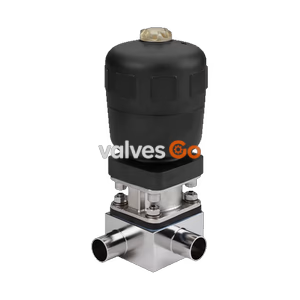
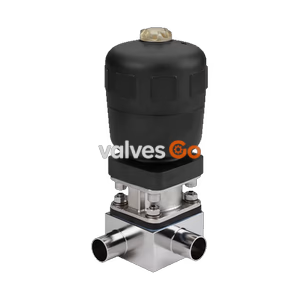
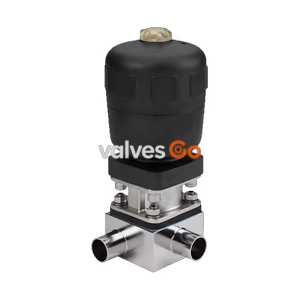
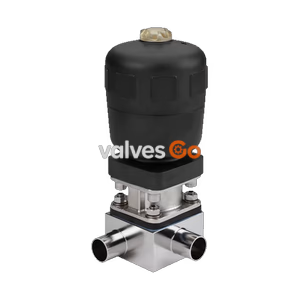
Bürkert Type 2973 2/2-way manual diaphragm valve features a flow-optimized body, autoclavable plastic handwheel, and integrated stroke limitation for hygienic applications.
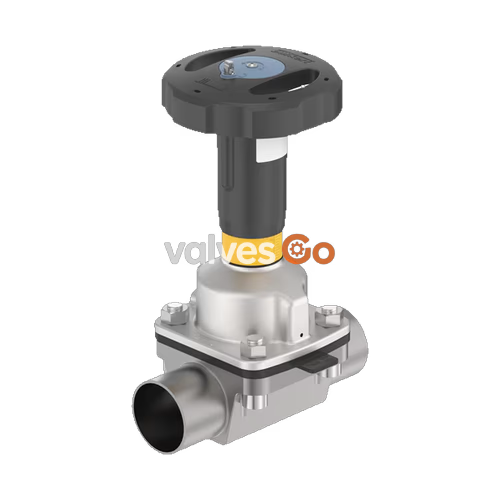
Bürkert Type 2973 manually operated diaphragm valve consists of a manually operated actuator, a diaphragm, and a 2-way body. The manual actuator with a plastic handwheel ensures use in hygienic or aggressive ambient conditions. The flow-optimized valve body with minimum dead space enables high flow values and a wide range of possible applications. The valve body and the diaphragms are available in all common materials and variants. The actuator has a compact, autoclavable design and is compatible with all other Bürkert diaphragm valves. An explosion-proof ATEX/IECEx device variant is available. The manual actuator possesses a visual position indicator with a reproducible stroke scale. The actuator also possesses an adjustable minimum and maximum stroke limitation and/or locking.
| Product properties | Description |
|---|---|
| Forged steel valve body (VS) | Forged stainless steel 1.4435 in accordance with BN2 DIN EN 10222-5, F316L in accordance with ASTM A182/A182M and 316L in accordance with ASME BPE |
| Tube valve body (VP) | Stainless steel tube 1.4435-BN2 / UNS S31603 (316L) according to DIN 11866, ASTM A269 / A270, DIN EN 10217-7 / 10216-5 |
| Cast valve body (VG) | Stainless steel precision casting 1.4435 / 316L |
| Plastic valve body | PVC-C, PVC-U, PP, PVDF |
| Diaphragm | EPDM (AD), PTFE/EPDM (EA), Advanced PTFE/EPDM (EU), laminate of GYLON® and EPDM (ER) |
| Actuator | Stainless steel/PPS |
| Diaphragm size | 15...50 |
| Nominal diameter | DN 08...DN 65 (1/4"...2 1/2") |
| Ambient temperature | -10...+130 °C (short-term up to +150 °C), autoclavable |
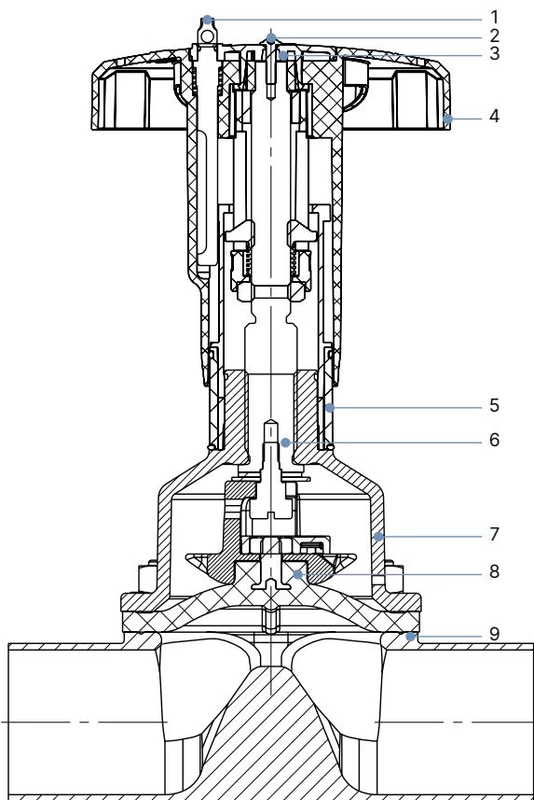
| No. | Element | Material |
|---|---|---|
| 1 | Lock pin | Stainless steel 1.4305 |
| 2 | Screw | Stainless steel A2 |
| 3 | Handwheel cover | Polyamide (PA) |
| 4 | Handwheel | Polyphenylene sulphide (PPS) |
| 5 | Visual position indicator | Polyamide (PA) |
| 6 | Valve spindle | Stainless steel 1.4305 |
| 7 | Diaphragm socket | Stainless steel 1.4308 |
| 8 | Diaphragm | EPDM, PTFE/EPDM, Advanced PTFE/EPDM, Laminate of GYLON® and EPDM |
INFO
Your product variant may differ from this illustration depending on the body and interface options.
| Diaphragm size | Maximum static operating pressure [bar] | Tightening torque EPDM, FKM [Nm] | Tightening torque PTFE/EPDM, GYLON® [Nm] |
|---|---|---|---|
| 15 | 10 | 0.8 | 1.7 |
| 20 | 10 | 0.9 | 3 |
| 25 | 10 | 1.2 | 3.5 |
| 32 | 10 | 2.5 | 4 |
| 40 | 10 | 4.5 | 7 |
| 50 | 10 | 6 | 11 |
WARNING
The tightening torques refer to the static media pressures specified above. Excessive torque can shorten the service life of the diaphragm. A tolerance of +10% applies to the tightening torques specified.
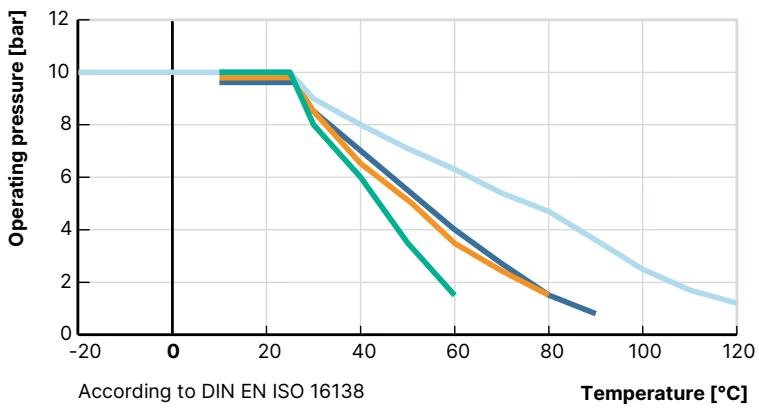
TIP
This information is important for material selection. Observe the permissible operating pressure depending on the medium temperature.
A minimum and maximum stroke limit can be set for Type 2973 (diaphragm sizes 15…50). The stroke limit is available as an option and is not integrated as standard. An adjusting sleeve is used for this purpose.
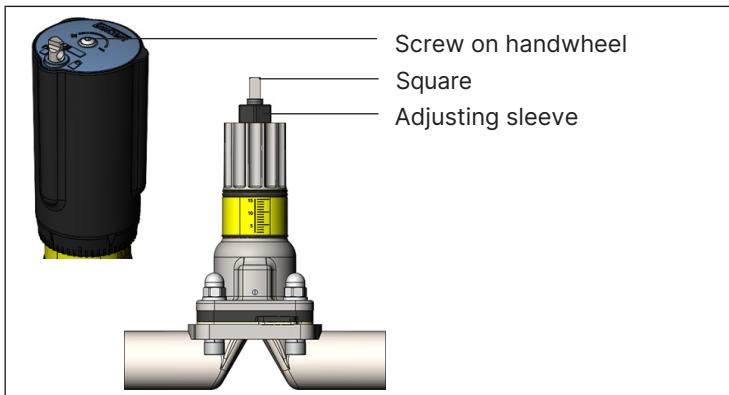
A locking mechanism is available as an option to prevent accidental or unauthorized operation. The locking pin has a bore (Ø 3.8) and can be secured against unauthorized use with a padlock.
Explore similar products in our catalog